
Yangon Zoological Gardens
Wildlife • Conservation • Education
Open Daily • 8 am to 5 pm
Hear directly from our keepers at each animal exhibit.
Map Here
Daily
9:30 AM
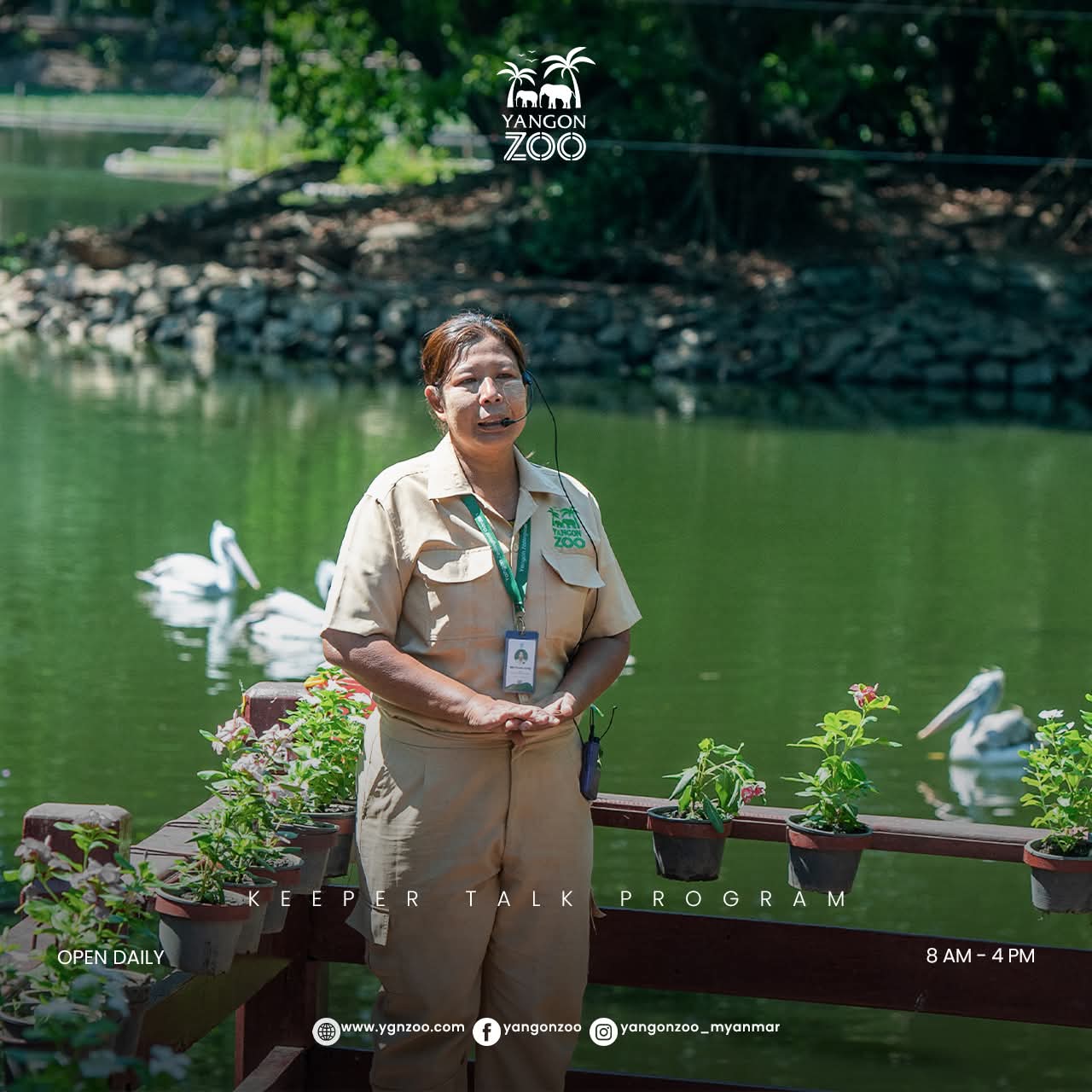
Pelicans are large water birds known for their distinctive throat pouch, which can hold up to about 3 gallons of water. This pouch helps them catch fish and regulate their body temperature. There are eight species of pelicans worldwide. Among them, the Dalmatian Pelican is the largest species. In Myanmar, the Spot-billed Pelican can be found and is currently conserved and cared for at Yangon Zoological Garden.

Map Here
Daily
10:00 AM
The Smooth-coated Otter is one of the two otter species found in Myanmar and is the largest otter in Southeast Asia, known for its smooth, shiny fur. It lives in rivers, lakes, and mangroves and mainly eats fish. They live in monogamous pairs and usually have 2–5 pups once a year. However, they are threatened by habitat loss, pollution, and hunting, and are legally protected in Myanmar.
Map Here
Daily
10:30 AM
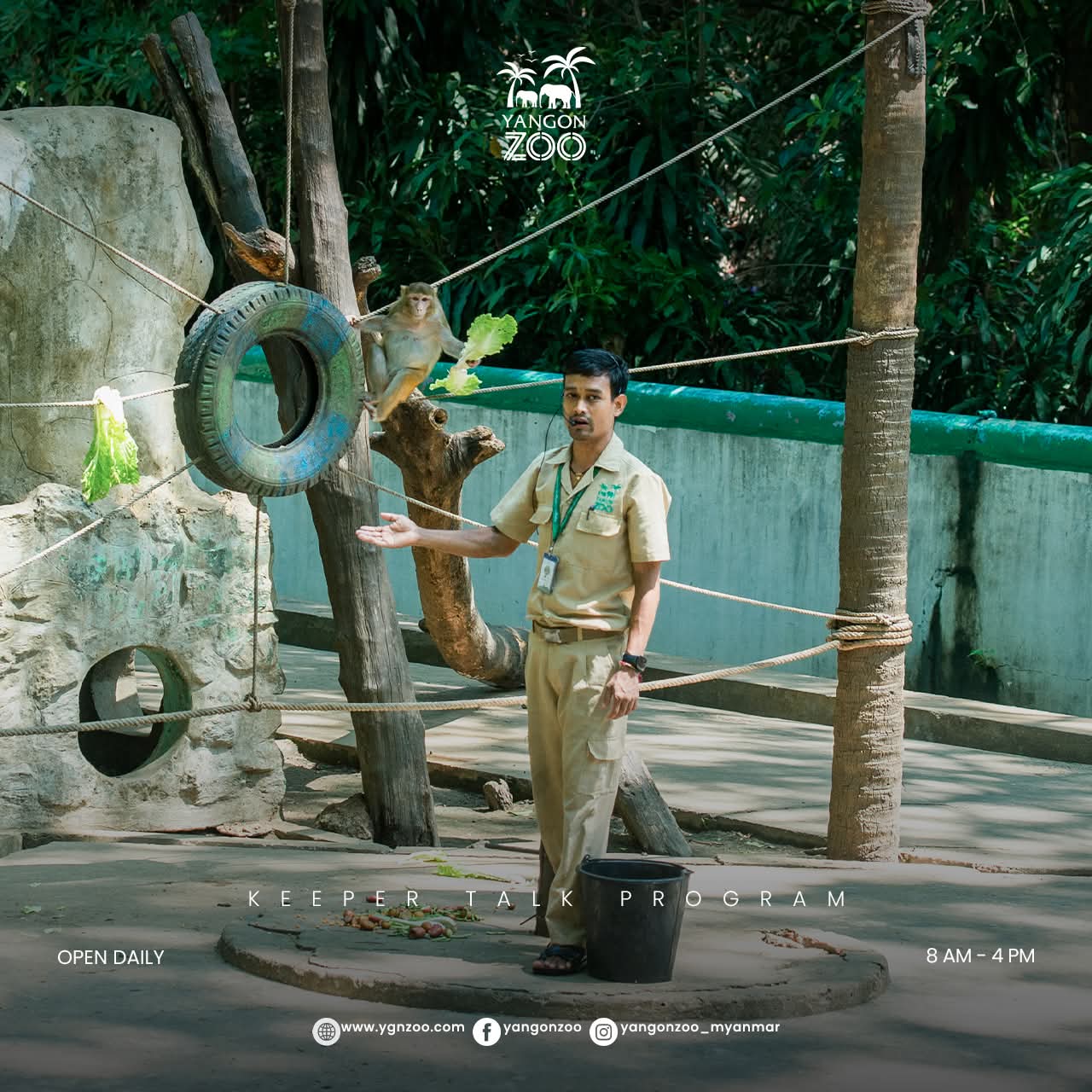
Rhesus is a medium-sized primate widely distributed across South, Central, and Southeast Asia, including Myanmar. They are highly adaptable and live in forests, grasslands, and urban areas. Rhesus macaques are omnivorous, eating fruits, seeds, insects, and small animals. They live in social groups led by dominant males and are known for their intelligence and complex social behaviors. Females reach maturity around 3–4 years, and males around 4–5 years. Gestation lasts about 165 days, typically producing a single offspring.

Map Here
Daily
11:00 AM
The Plains Zebras kept at the Yangon Zoological Garden are herbivorous animals that originally inhabited the African savanna grasslands. Their unique feature is that the black stripes on each zebra's body are completely unique to that individual, much like human fingerprints. Zebras are social animals that live in herds and possess exceptionally sharp eyesight and hearing. To escape from predators, they are capable of running at speeds of up to 40 miles per hour. Furthermore, they have the unique habit of sleeping while standing up to ensure they can quickly react to danger. Regarding their reproductive traits, they reach maturity at the age of three, have a gestation period of 12 to 13 months, and typically give birth to only one foal at a time. The average lifespan of a zebra is 20 to 30 years, though they can often live longer when kept in zoological gardens.

Map Here
Daily
14:30 PM
Elephants are the largest land mammals, with two species: Asian and African elephants. Asian elephants can be found in 13 countries, including Myanmar, and usually live in groups led by an older female. They are herbivores, eating large amounts of plants each day, and cool their bodies using water, mud, and ear flapping. Elephants are also known for their high intelligence and strong memory. They become sexually mature at 10–15 years, give birth to one calf after 18–22 months of pregnancy, and can live 60–70 years in the wild.
Map Here
Daily
15:30 PM
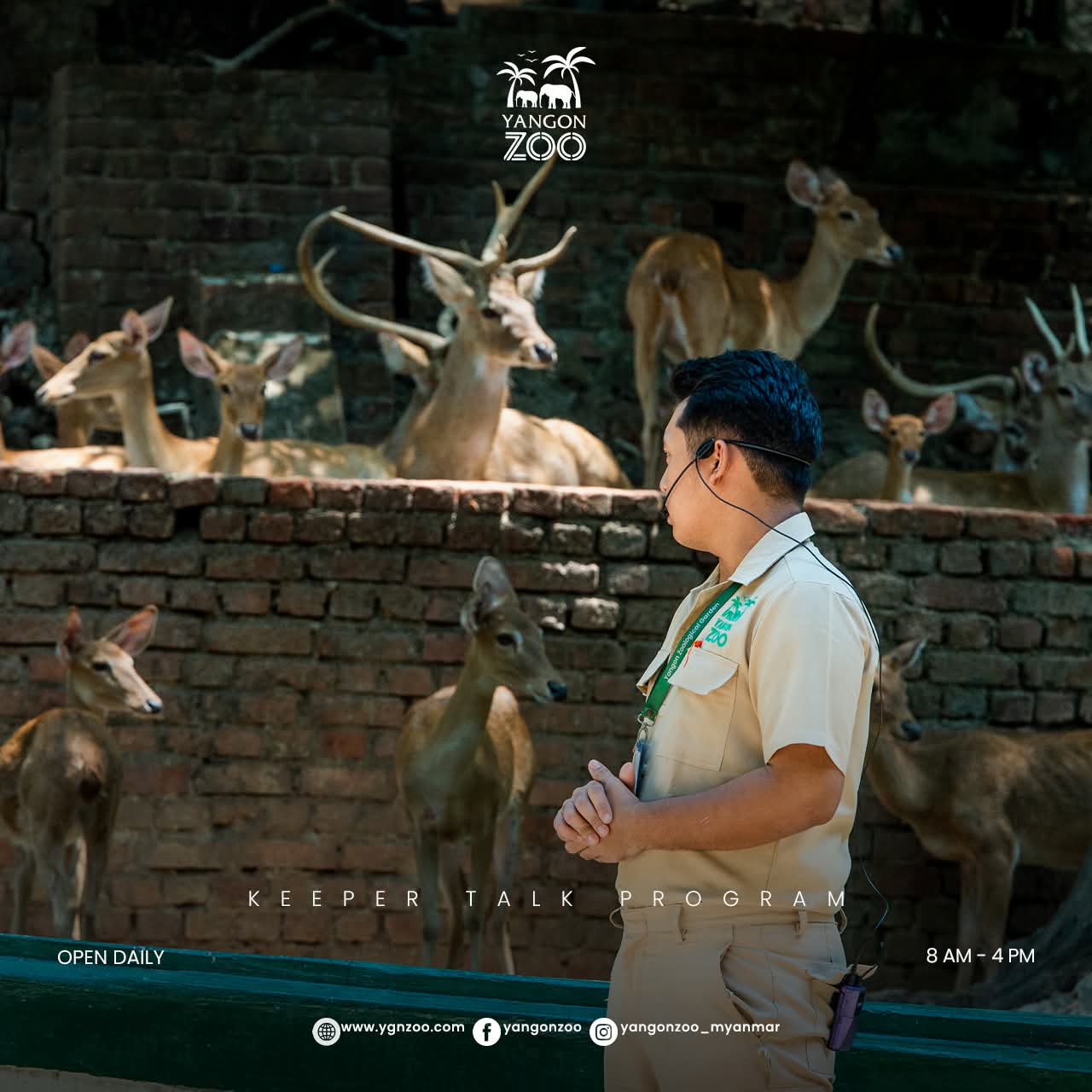
The Eld’s Deer (Thamin) is a proud endemic species of Myanmar, primarily inhabiting dipterocarp forests, scrublands, and dry deciduous forests. Physically, they possess a slender, reddish-brown body, with the males distinguished by their uniquely beautiful bow-shaped antlers and neck manes. They shed their antlers once a year (during June and July) and feed on tender grasses, young leaves, and fruits.